


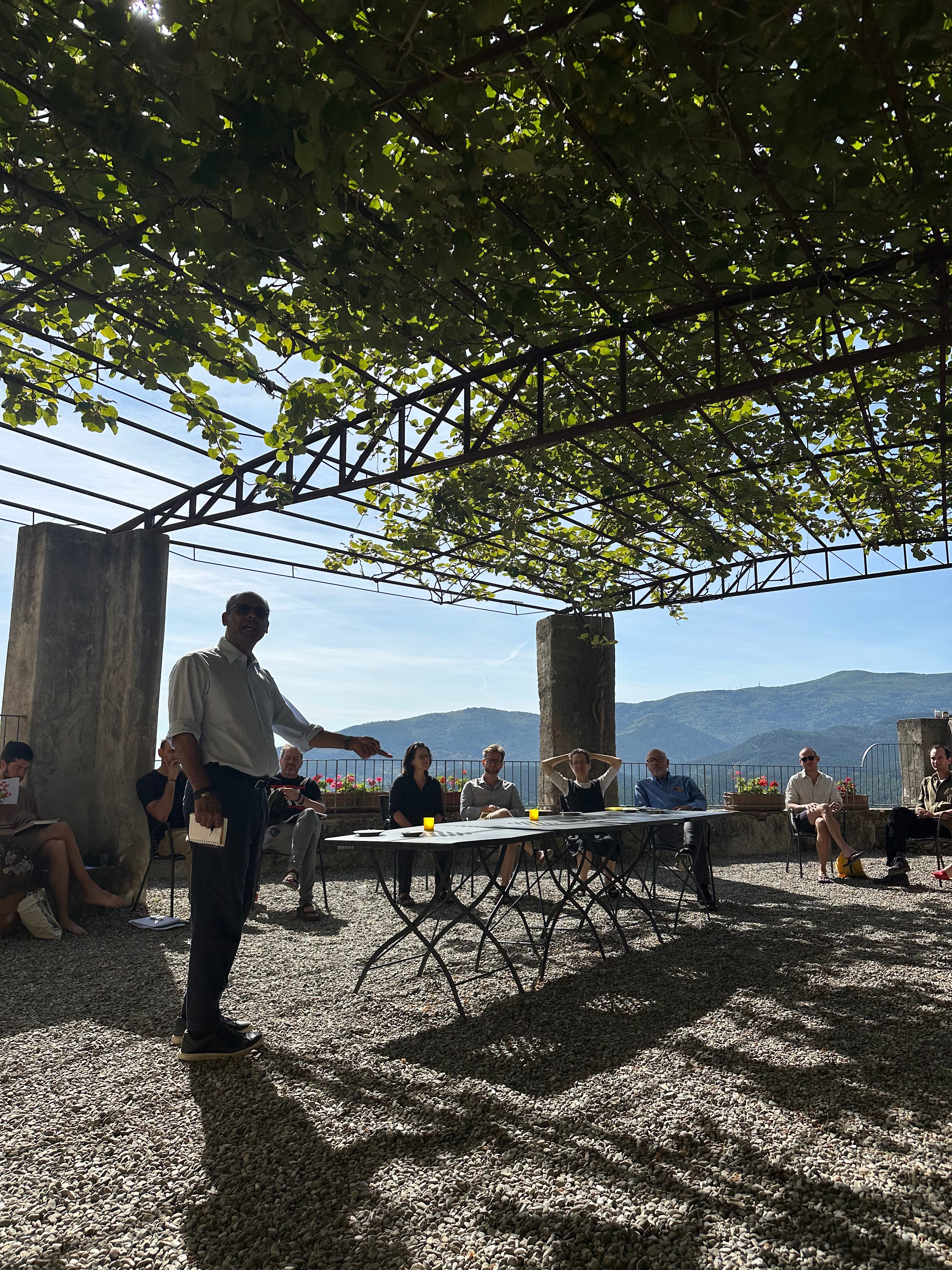
my window in the monastery faced the terrace
this meant i woke up to academics talking over breakfast, heard them after breakfast, during lunch, after lunch, before dinner, after dinner, and then fell asleep to the same low collective buzzing
after three days with the talking bees, the reward was an invitation to the premium bees
which sounds meaner than i mean it to. but the place really did hum. not a conference exactly, not a retreat exactly – more like stone walls, weak wi-fi, long meals, and no obvious way to leave one conversation without being claimed by two more
how a feature test became tuscany
while building self.md, i made an AI board to validate a new product feature. one of the test personas became Ivan Illich and proposed something i started calling the Illich test.
my first reaction was: Illich? Ilyich? Lenin?
then i actually read him. then i wrote a dead priest and your AI problem, somehow, it reached an old friend of Illich, who read it, liked it, and invited me to contribute to an Illich centenary book chapter and come to Italy. so i came to Italy. and a feature-validation bug becomes a flight to Tuscany.
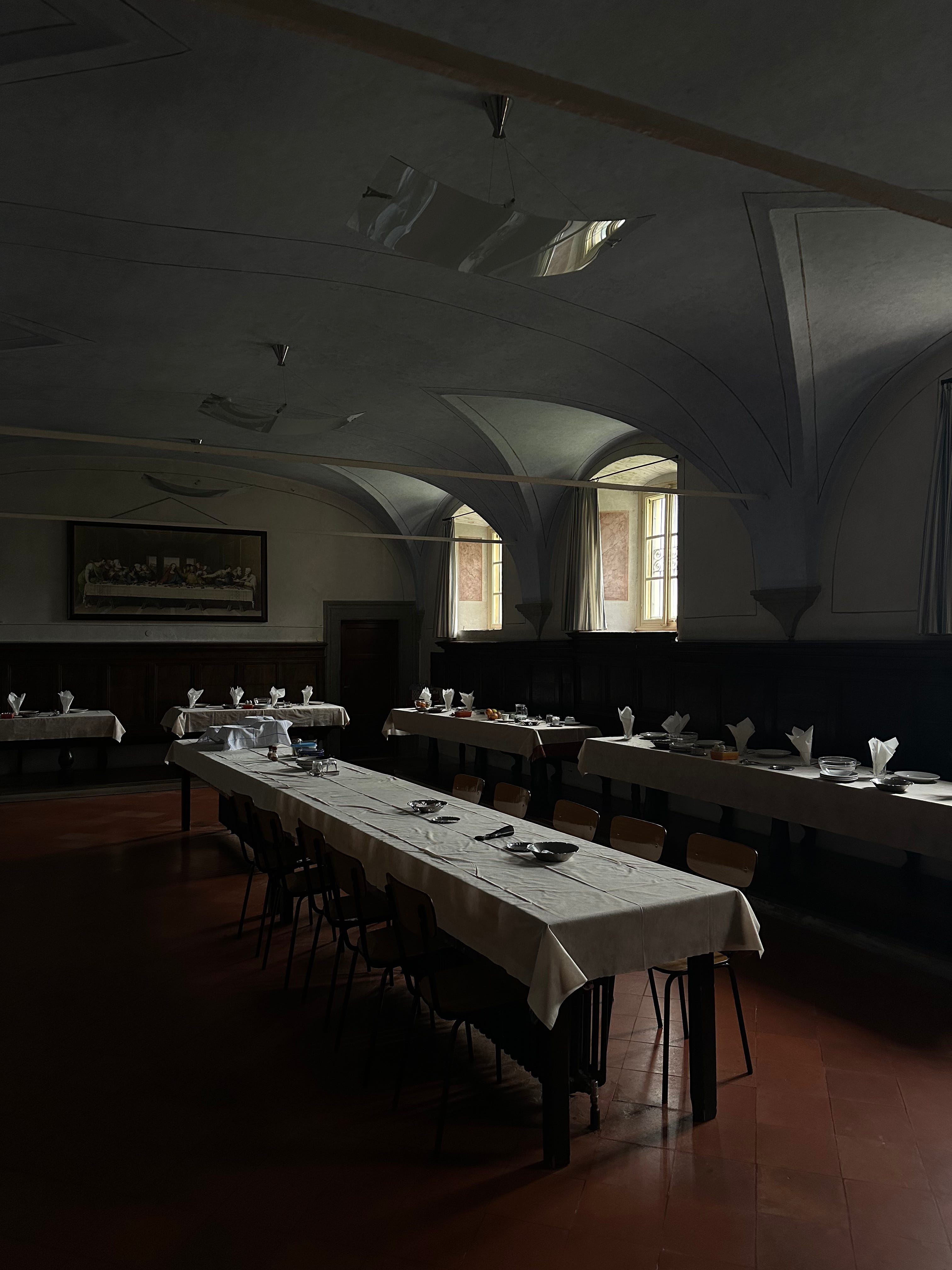
the event was at Convento San Cerbone, in Tuscany near Lucca. two parts: a larger public gathering, then a smaller contributors' workshop — the premium bees. i had expected something narrower. maybe a museum version of Illich: a few old European men, a lot of certainty, not much weather. instead the room was wider than my lazy expectation. people had come from New Zealand, Korea, Brazil, the U.S., half of Europe. different ages, different lives. people who had spent decades inside universities. some inside code. some inside churches. some inside the long argument with institutions that never really ends.
useful stupidity
honestly, it felt good to be stupid in the room.
not stupid in the humiliating way. stupid in the useful way — when the room is large enough that your usual map immediately gets smaller. my map was already kind of a mess. the room just made the mess legible.
every time i reached for a familiar frame — technology, politics, autonomy, tools, AI — somebody answered from a place i had not prepared for: theology, medicine, friendship, disability, public health, mathematics, church history, or a lifetime spent watching institutions break the people they were meant to serve.
very annoying. very good.
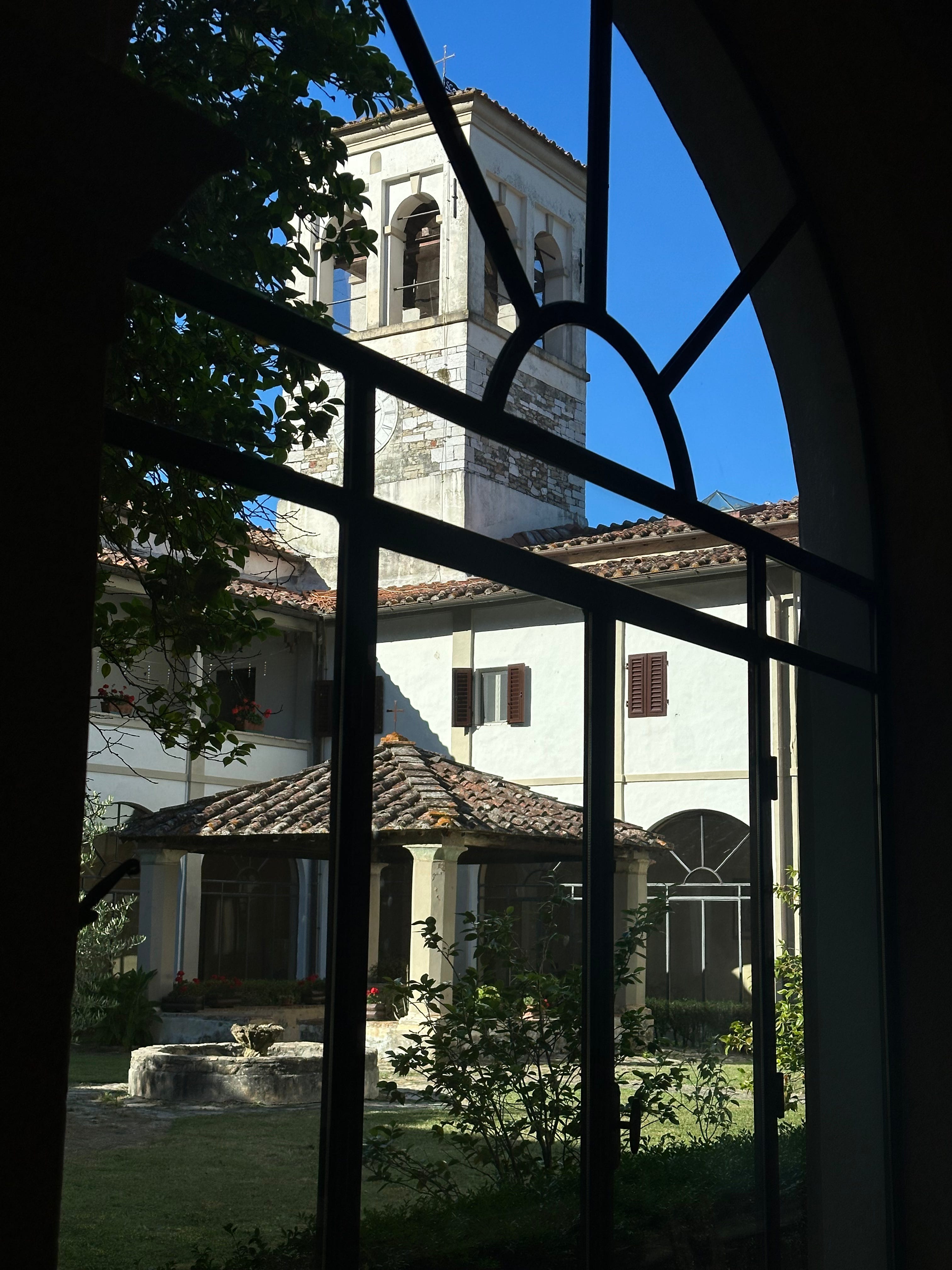
Convento San Cerbone is not a hotel with arches. meals arrived at fixed hours. bells kept time. the cloud connection was weak. the terrace connection was strong. too much bread, not enough silence between arguments. there was very little chance of staying abstract for long.
politics before politics
one day after enough buzzing, i found myself asking the most basic question i could:
how does Illich even understand politics?
i came in with my usual political map: eastern europe, protests, states, governments, people who decide things, people who get crushed by the decisions.
but the room kept moving somewhere less familiar. not away from politics — deeper into what makes politics possible before anyone runs for office. church, institution, threshold, hospitality. who gets to enter the room. who is heard before being certified. who is treated as a person before being processed as a case.
one of Illich's useful tricks is that he makes clean categories stop behaving. school is not just education. medicine is not just care. church is not just religion. technology is not just tools. each one creates habits, dependencies, exclusions, permissions. each one teaches a body how to move, wait, ask, obey, refuse.
his sharper phrase for this: radical monopoly — when one system does not merely win, but makes other ways of living feel impossible, backwards, or not worth trying. the counter-word is conviviality: tools and arrangements small enough that people can still use them without being reorganized by them.
the bells rang. twenty people trying to keep arguing while also trying to find wine.
old stone, new rooms
one evening we were singing in a church in the same monastery. the stone was cold enough that everyone sounded slightly more devout than they probably were. a few hours earlier we had been arguing about AI, digital commons, and whether mathematics is just art with a perfection problem.
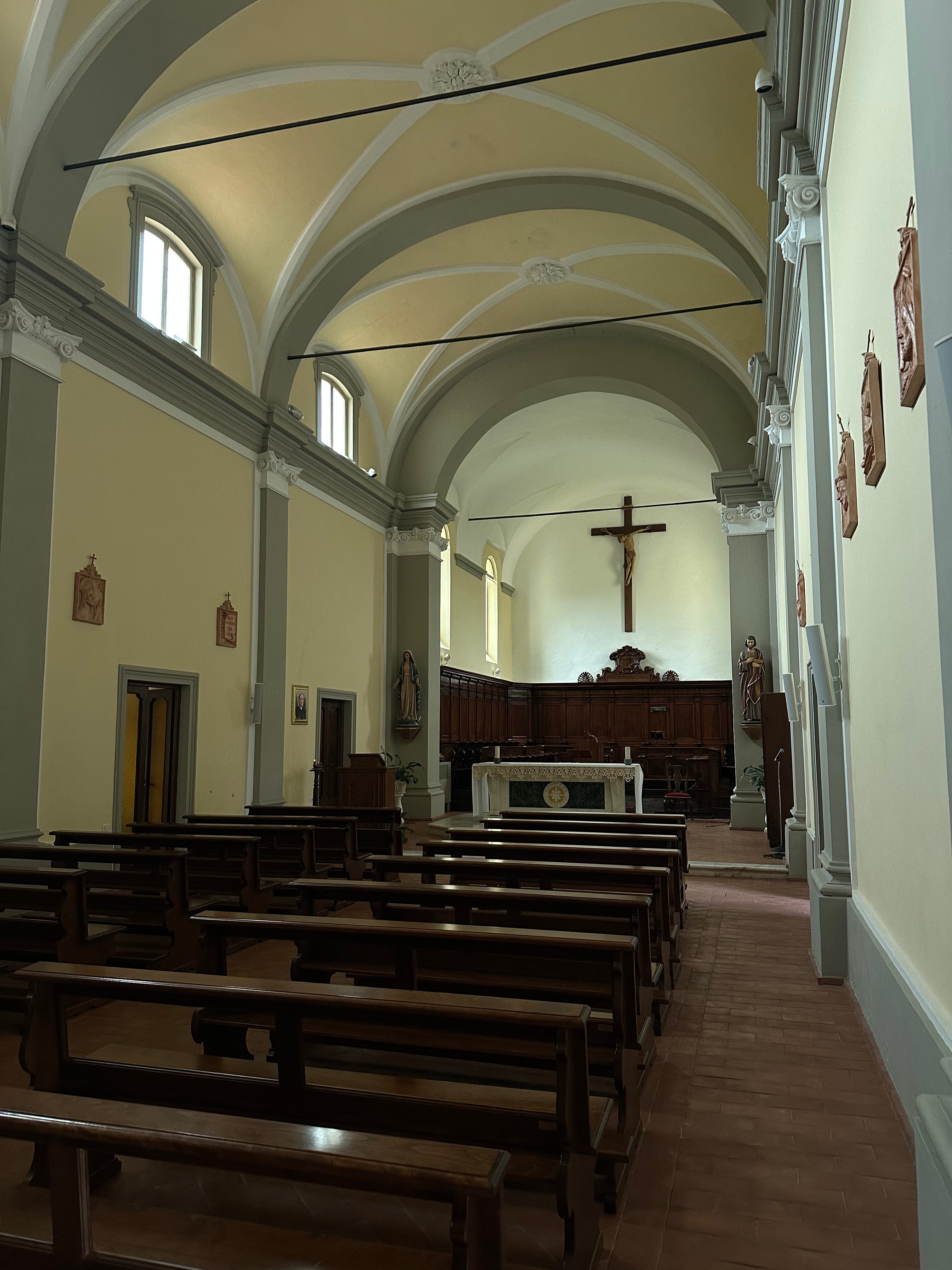
somehow this had started to feel normal.
five years ago that sentence would have sounded ridiculous. there, it just felt like tuesday. maybe the future does not arrive as a clean break. maybe it arrives as an ordinary day wearing the wrong century.
the metaverse failed as a product and won as a condition. i don’t mean headsets — i mean feeds, possible selves, the essay a moment starts becoming before the moment is over. too many parallel lives hanging off one actual life. you can live in so many versions of yourself that none of them is actually you anymore.
the monastery had the opposite problem. or maybe the same one, just slower. someone used the word askesis. i had to look it up later. it basically means: say no to enough things that your one real life doesn’t disappear. not detox, not minimalism, not a productivity hack. just — stop pretending you can be in six rooms at once.
dangerous help
and then, in the middle of all that buzzing, i asked a question that made the room less clever.
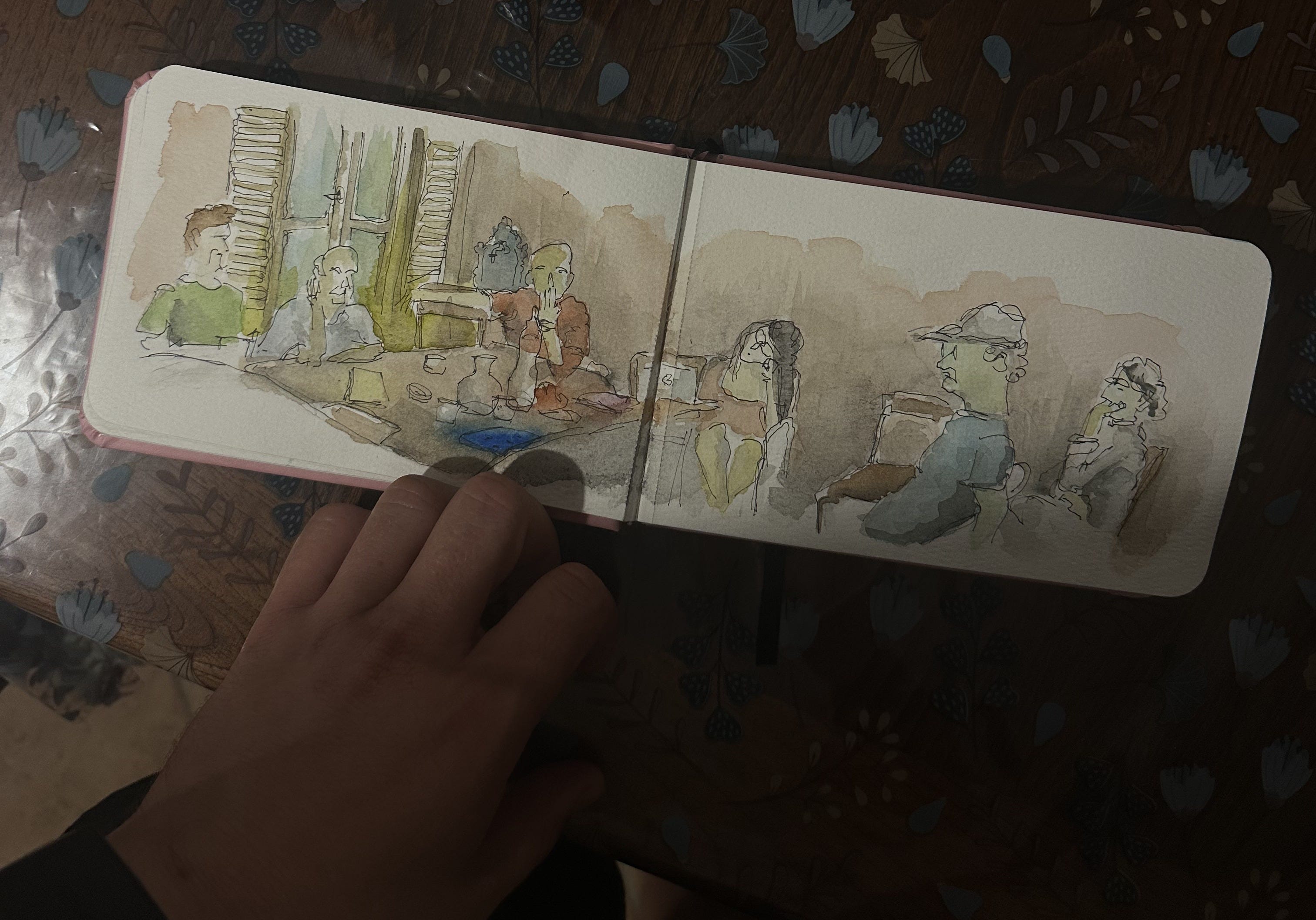
a private illness story opened the question of Illich's critique of medicine. i am not naming anyone, and i am not using the story as proof.
but the question was actually simple. Illich said medicine as a system does harm — not the pills, not the chemo, but the system that turns your health into a product and you into a case file. he called this iatrogenesis. sorry for the academic, i picked up too many words that week.
the point is: some treatments save lives. the target was never care. the target was capture — when medicine becomes the only language your body is allowed to speak.
but here is what worried me. if someone reads Illich and decides not to treat their cancer because the philosopher said medicine is bad — that is not freedom. that is just another dependency. you traded one master for another. the hospital told you what to do, and now a dead priest is telling you what to do.
Illich is useful until he becomes a rulebook. medicine is useful until it becomes the world. critique is useful until it becomes another way not to meet the body in front of you.
there should be a word for this – the moment when a good idea forgets it is standing in a room with a real body. disincarnation, desencarnación. probably too strong. but disembodiment felt too clean, too much like a word from a conference. i mean something rougher: illness, fear, the doctor's room, the stupid animal fact of wanting to stay alive. not what the person did. what ideas do when they lose contact with flesh.
the good hive
this was where the bees mattered again.
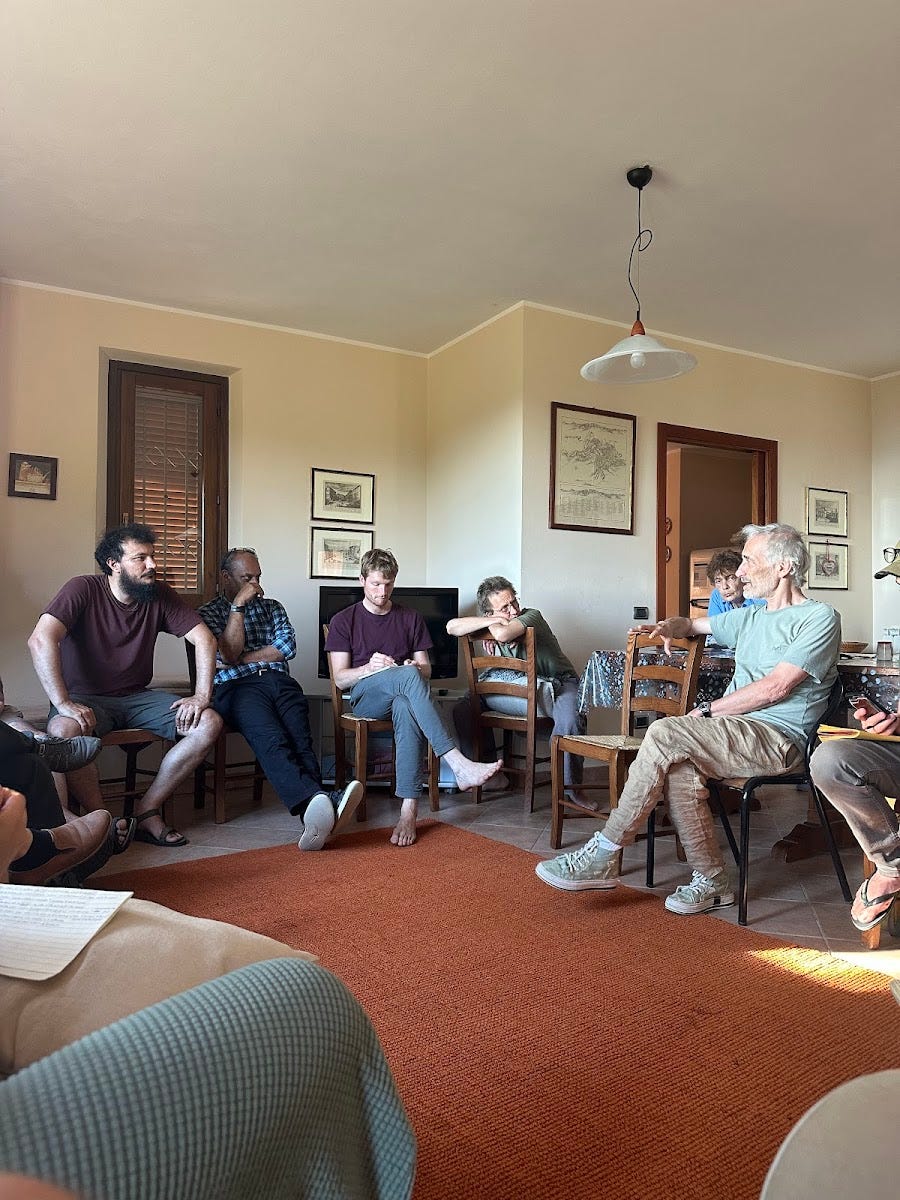
all that buzzing was not only noise. it was a way for the room to keep interrupting any doctrine that got too clean. one person would make a beautiful point. another would ruin it with a body. a memory. a counterexample. a story from a hospital, a school, a village, a church, a codebase, a friendship.
that is the good hive. nobody gets to keep a theory clean for more than one lunch.
not consensus. friction.
by the end i was tired of talking. tired of hearing my own sentences try to become smarter than my experience. i wanted silence, Lisbon, my own bed, fewer bees.
i left with no thesis. just the bees still doing unpaid editorial work somewhere behind my skull, the church singing, the strange normality of arguing about AI inside old stone, and one question i could not turn into a framework fast enough:
when does help stop being help and become the world you have to live inside?
and when does refusing help become just another way of obeying?
keep the hive open
subscribe for more notes from rooms where AI, institutions, and bad ideas start misbehaving: embassy.svit.la
Ray Svitla
stay evolving 🐌
adorei